Immersive audio in music is a way of mixing and playing back recordings so that sounds seem to arrive from around and above the listener, not only from a line between two speakers. Engineers place voices and instruments in a three-dimensional space, and the playback system (a speaker array, a soundbar or a pair of headphones) renders that space as well as it can. The best-known format today is Dolby Atmos, which Apple, Amazon and Tidal all stream; Sony's 360 Reality Audio is a rival built on the MPEG-H standard. Whether it sounds better than stereo depends far more on the mix and the playback chain than on the logo.
Immersive audio at a glance
- What it adds: height and depth to the familiar left-right stereo image.
- Main formats: Dolby Atmos (object-based, with a channel "bed") and 360 Reality Audio, which Sony announced in January 2019 and which uses the MPEG-H 3D Audio standard.
- Where you hear it: streaming services, Blu-ray audio discs, cinemas and a growing number of headphones, phones and soundbars.
- First major music release in Atmos: the 25th anniversary edition of R.E.M.'s Automatic for the People, released by Craft Recordings on 10 November 2017, according to the album's Wikipedia entry.
- Industry recognition: the Recording Academy has given an award in this area since 2005; the category was renamed Best Immersive Audio Album for the 2019 season.
A short history of sound beyond stereo
Immersive music is older than the streaming badge suggests. Quadraphonic sound put four speakers at the corners of a room and reached the public in the early 1970s. As the history of quadraphonic sound records, it was a commercial failure at launch because of technical problems and incompatible formats, yet many of those four-channel recordings were later reissued on SACD, DVD-Audio and Blu-ray once home cinema revived interest in multichannel music in the 1990s.
British researchers took a different route at the same time. Ambisonics, developed in the UK in the 1970s by a group including Michael Gerzon and Peter Fellgett with support from the National Research Development Corporation, describes a full sphere of sound, including sources above and below the listener. Its channels carry a speaker-independent description of the sound field that is decoded for whatever speakers you own. It stayed a niche for decades, then found a new life in virtual reality and 360-degree video, because the sound scene can be rotated to follow the viewer's head.
Headphone listening has its own lineage. Binaural recording uses two microphones, often placed in the ears of a dummy head, to capture the cues a real listener would hear; the history goes back to Clément Ader's théâtrophone of 1881. Binaural recordings are made for headphones and do not translate properly to ordinary speakers.
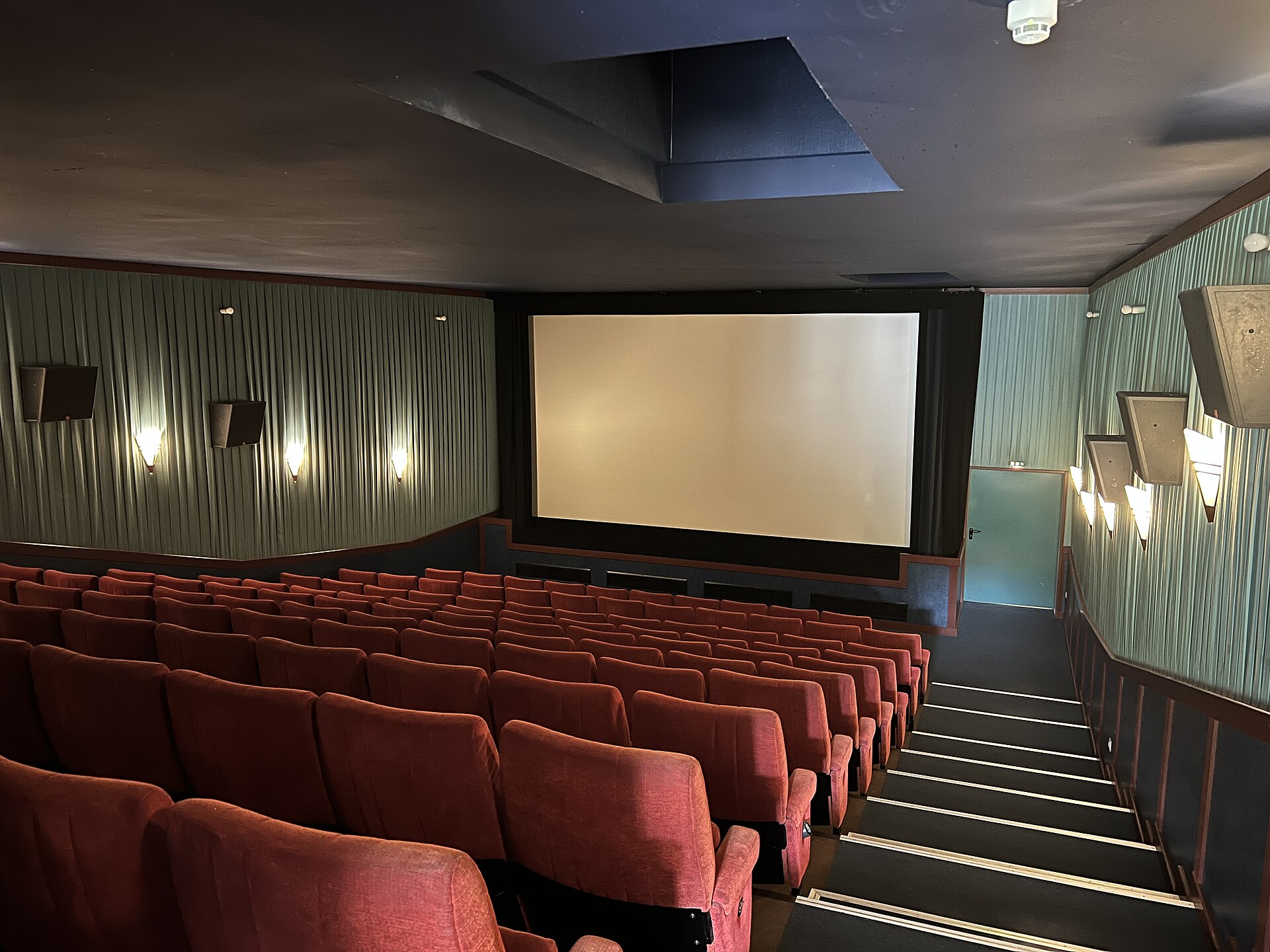
Dolby Atmos began in the cinema. Its first installation was at the El Capitan Theatre in Los Angeles for the premiere of Brave in June 2012, and by April 2023 more than 7,800 screens in 105 countries supported or were committed to the format, according to the Dolby Atmos entry on Wikipedia. The music version arrived on the streaming services Tidal and Amazon Music in December 2019.
How immersive mixing works
Stereo is channel-based: the engineer decides how loud each sound is in the left and right speaker, and that decision is baked into two files. Atmos keeps channels but adds objects. A session can hold up to 128 audio tracks, each with metadata describing its position and level over time. Some tracks feed a conventional "bed" of fixed channels for ambience; the rest are objects that the engineer can place, or move, anywhere in the space.
The crucial step happens at the listener's end. A renderer reads the metadata and works out what each speaker should play, based on the speakers that actually exist. The same mix can therefore play on a 7.1.4 home system (seven ear-level speakers, a subwoofer and four overhead or upward-firing speakers), on a soundbar, or on headphones. For home film, television and music, Dolby uses "spatial coding" to group objects into a maximum of 16 dynamic clusters, which keeps the data rate manageable.
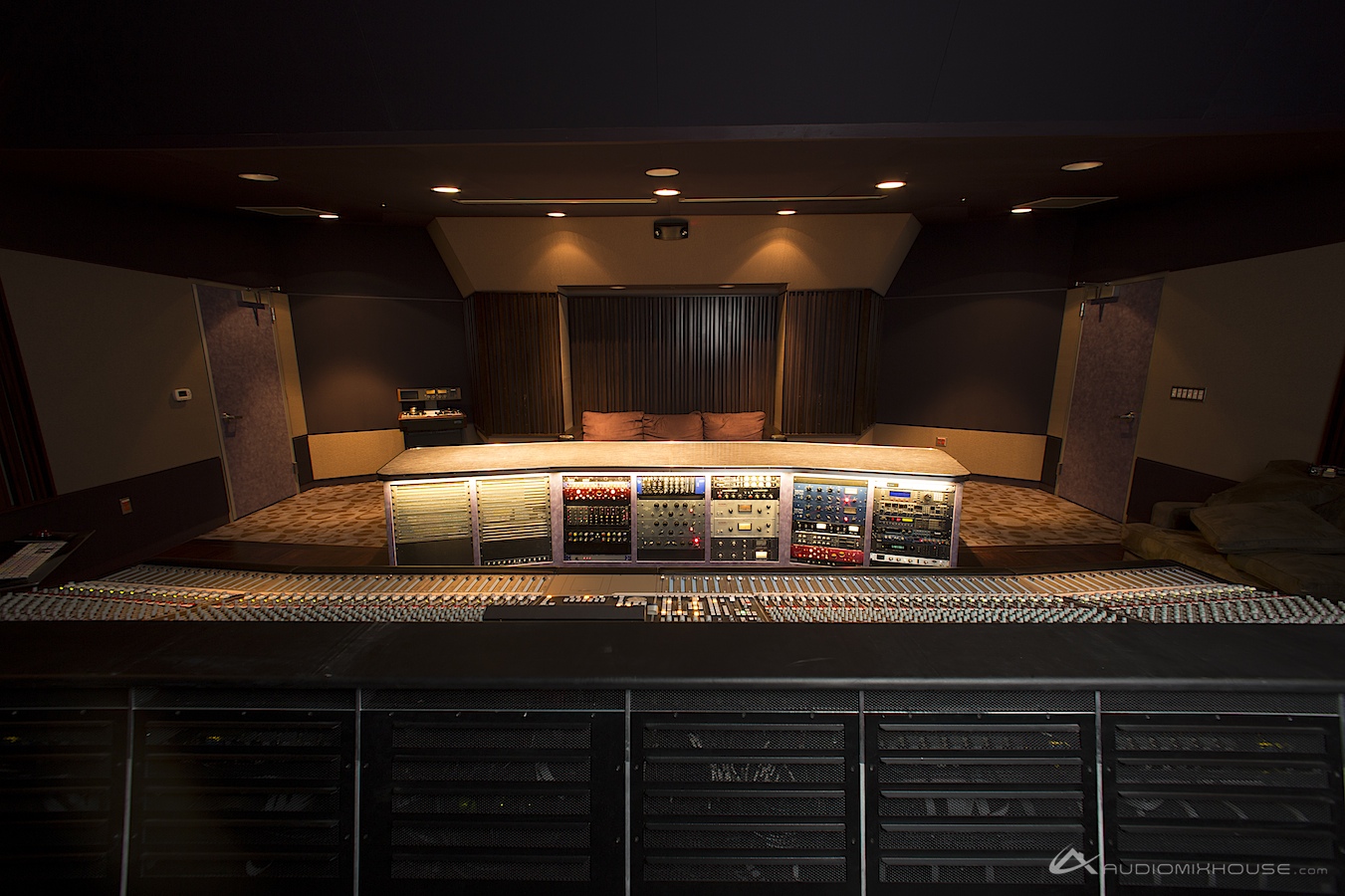
Engineers build these mixes in a digital audio workstation. Dolby supplies a plug-in for Pro Tools and Cubase, and large consoles such as AMS Neve's DFC can author Atmos directly. MPEG-H, the basis of Sony's format, works on similar principles: it can carry channels, objects or higher-order ambisonics, supports up to 64 loudspeaker channels and also renders binaurally for headphones.
How headphones fake a room
Most people hear immersive music on headphones, which have only two drivers. The trick relies on the head-related transfer function, or HRTF: the way your head, outer ears and ear canals colour a sound depending on where it comes from. A pair of HRTFs can turn an object's position into a binaural signal that seems to come from a particular point in space.
There is a catch. HRTFs vary significantly from person to person, and a renderer uses a general model unless it has been personalised. That is one reason two listeners can describe the same Atmos track very differently: for one, a backing vocal floats clearly behind the head; for another, it simply sounds wider and slightly hollow. Head tracking, which keeps sounds fixed in the room as you turn, helps the illusion on supported headphones but does not change the underlying mix.
Where to listen in the UK
Apple Music added Spatial Audio with Dolby Atmos in June 2021 at no extra cost to subscribers, announced in Apple's May 2021 newsroom release. The release quotes the producer Giles Martin, who said he had already mixed "some of the greatest artists in history" in Atmos: "With this work I have found myself falling into albums I love." Apple's support page on Dolby Atmos in Apple Music explains the settings: in the Music settings you choose Automatic, Always On or Off. Automatic plays supported songs in Atmos on Apple or Beats Bluetooth headphones and on the built-in speakers of recent iPhones, iPads and Macs; if you use wired headphones, Apple advises choosing Always On. The same page covers Android and Windows, where you may need Dolby's Access app.
Amazon's UK page for Amazon Music Unlimited lists HD and spatial audio as part of the plan, at £12.99 a month or £11.99 for Prime members (checked October 2026). Tidal also carries Dolby Atmos music, as it has since December 2019. Catalogue sizes and the exact devices supported change often, so check the service's own help pages before you subscribe for this feature alone.
On physical media, Blu-ray audio discs remain the best way to hear high-bitrate immersive mixes on a home system. Peter Gabriel's i/o is a useful example of how artists now treat formats as creative choices: the album came in a "Bright-Side Mix" and a "Dark-Side Mix" in stereo, plus an "In-Side Mix" in Dolby Atmos on editions that include the Blu-ray, as described in the album's Wikipedia entry.
Immersive audio versus stereo
Stereo has been the reference for most popular music for decades, and it travels well: a stereo master sounds broadly as intended on phones, car systems and club rigs. Immersive mixes depend on decoding and hardware, and on cheap speakers they fold back towards something close to stereo, sometimes with less punch.
Where immersive mixing helps is separation. Spreading parts in space can reduce masking, so a dense arrangement or a large choir has more room. It can also suit music that was always about space: orchestral and choral recordings made in resonant churches, ambient and electronic pieces, and live recordings.
Where it hurts is when a mix exists only because a label needed an Atmos version. Spreading the stems of an old record around the listener does not automatically reveal anything, and a familiar balance can feel disturbed. Listen track by track and compare with the stereo version at matched volume; louder almost always sounds "better" for a few seconds.
Records worth hearing as a test
The Grammy Award for Best Immersive Audio Album is a good map of carefully made immersive work, because it goes to the engineers and producers rather than the performers. Its first winner, in 2005, was Ray Charles's Genius Loves Company. Recent winners include Alicia Keys's The Diary of Alicia Keys (2024), Peter Gabriel's i/o (In-Side Mix) (2025) and Justin Gray's Immersed (2026). The engineer Morten Lindberg, whose choral and chamber recordings for Trondheimsolistene and Nidarosdomens Jentekor recur through the list, won in 2020 with Lux.
A practical listening session might pair one pop record, one acoustic recording made in a real space and one archival remix. Notice whether the lead vocal stays anchored, whether the height channels carry music or just reverb, and whether you stop thinking about the format after a minute. If you write about what you hear, our sister title Creativity's UK covers creative practice, and Artculture.uk publishes guides to listening and reviewing.
What to check before you invest
Start with what you own. Many people can try Atmos music today with headphones and a streaming plan they already pay for. Before buying anything new, check:
- The service: does your plan include spatial audio, and on which apps and devices? (Check the provider's help pages, as of October 2026.)
- The device: does it decode Dolby Atmos itself, or does it need an app or licence? On Windows, Dolby Atmos for Headphones requires a licence through the Dolby Access app.
- The speakers: a soundbar with up-firing drivers adds some height; a calibrated 5.1.2 or 7.1.4 system adds more. Room size and ceiling height matter.
- The mix: look for credits naming the immersive mix engineer, and read reviews that compare the Atmos and stereo versions directly.
Immersive audio is best treated as another edition of a record, like a remaster or a mono reissue. Some editions become the definitive way to hear an album; others are curiosities. Your ears, at matched volume, are the only reliable judge.
Photo: Audio Mix House from United States, CC BY 2.0, via Wikimedia Commons