Slow cinema is a strand of art cinema built on long takes, extended duration, sparse dialogue and minimal plot, often with non-professional actors and long stretches of near silence. The label only took hold in the 2000s and 2010s, but the approach runs back through Tarkovsky, Antonioni and Italian neorealism. It matters because it changes what a film asks of its audience: instead of compressing time into a stream of events, it lets time pass on screen and makes the act of watching part of the meaning.
Slow cinema at a glance
- Core traits: long takes, emphasis on duration, understated storytelling, attention to stillness and everyday routine, minimal dialogue and frequent use of non-professional performers, as summarised in the Wikipedia overview of slow cinema.
- Origin of the term: critic Jonathan Romney used "slow cinema", perhaps for the first time, in a 2004 review of Tsai Ming-liang's Goodbye Dragon Inn (2003) for the Independent, according to the BFI.
- Ancestors: Antonioni, Rossellini, De Sica and Tarkovsky; Ozu and Bresson are also cited as precursors.
- Key modern names: Béla Tarr, Lav Diaz, Tsai Ming-liang, Pedro Costa and Chantal Akerman.
- Landmark: Akerman's Jeanne Dielman, 23 quai du Commerce, 1080 Bruxelles (1975) topped the 2022 Sight and Sound critics' poll.
It is better described as an approach than a genre in the strict sense. It turns up in fiction and documentary, in black-and-white Hungarian epics and in Thai ghost stories, and the common thread is a refusal to hurry.
Where the name came from
The phrase is younger than the films it describes. In her BFI list of 10 great slow films, the critic and researcher Nadin Mai credits Romney's 2004 review with the first use, and notes that the phrase only began to take hold in the 2010s. Around the same time the French critic Michel Ciment spoke of a "cinema of slowness" when discussing Tsai, Tarr and Abbas Kiarostami. In 2008 Matthew Flanagan's essay "Towards an Aesthetic of Slow in Contemporary Cinema" set out many of the qualities critics still use to describe the style.
By 2010 the term was common enough to provoke a backlash. Nick James's Sight and Sound editorial "Passive-Aggressive" questioned whether long takes had become a safe default rather than a provocation, and set off a debate that ran across film blogs for months. Romney himself, writing in Sight and Sound, called slow cinema a "varied strain of austere minimalist cinema", a phrase quoted by Sukhdev Sandhu in the Guardian.
Where slow cinema came from
The roots lie in the years after the Second World War. Mai traces them to Italian neorealism and its new emphasis on observing the real, and names Michelangelo Antonioni, Roberto Rossellini, Vittorio De Sica and, later, Andrei Tarkovsky as the forerunners. In an n+1 essay on the "slow wars", Moira Weigel describes Antonioni as "so often cited as the first master" of the form, a director who stretched time beyond what the story needed to convey alienation. She also points to Andy Warhol's Empire (1965), which turned hours of footage of the Empire State Building into a film.
Paul Schrader's 1972 book on Ozu, Bresson and Dreyer is another reference point. The 2018 edition from University of California Press adds a new introduction in which Schrader revisits his ideas in the light of slow cinema, from Tarkovsky to Kiarostami to Tarr. Schrader admits most viewers find slow films boring, but argues that a "slow film director keeps his viewer on the hook, thinking there's a reward, a payoff just around the corner."
Tarkovsky gave the tendency its most quoted idea. "I think that what a person normally goes to cinema for is time," he claimed, and he titled his 1987 book Sculpting in Time. After 1990, Mai writes, slow films became longer and slower, as directors from the Philippines, Taiwan, Portugal, Belgium and Hungary came to the fore.
Béla Tarr and the long take
No director is more closely tied to the label than Béla Tarr, who died in January 2026 at the age of 70. The Hollywood Reporter obituary describes a career of nine features, from Family Nest (1979) to The Turin Horse (2011), and calls his 450-minute Sátántangó (1994), adapted from the novel by László Krasznahorkai, "one of the founding films of the contemporary slow cinema movement". The same report notes that Gus Van Sant cited Tarr as a major influence on Gerry, Elephant and Last Days.
A Tarr shot can last several minutes, following people across mud and wind with no cut to release the tension. Some critics called the effect "temporal realism". Susan Sontag said of Sátántangó: "I'd be glad to see it every year for the rest of my life." After The Turin Horse won the Grand Jury Prize in Berlin, Tarr declared his work complete and turned to teaching, founding the film.factory school in Sarajevo in 2012.
Why critics value slow films
The case for slow cinema rests on attention. When a shot runs for minutes, the eye has time to explore the frame, notice small changes in light and sound, and form its own reading. Sandhu's 2012 Guardian piece, "Slow cinema fights back against Bourne's supremacy", sets this against action cinema, where the average shot in The Bourne Ultimatum lasts about two seconds. He argues that films such as Jia Zhang-ke's Still Life, Carlos Reygadas's Silent Light and Apichatpong Weerasethakul's Uncle Boonmee Who Can Recall His Past Lives "opt for ambient noises or field recordings rather than bombastic sound design" and ask the viewer's eye to do more work.
There is also a social argument. Mai writes that slow cinema is less a response to speed than to "a growing sense of alienation", and that it has become a way of seeing "the alienated, the oppressed, the persecuted, the unemployed, the suffering". The scholars Katherine Fusco and Nicole Seymour, in their book on Kelly Reichardt, make a related point: for people on the margins, modernity is often experienced as slowness, so these films are not simply a soothing escape.
The critics have a case too. Slow cinema has been accused of indifference or even hostility to audiences, and Nick James argued that what began as provocation had become a default idiom. Dan Fox in Frieze rejected the framing of the whole debate as "philistine" against "pretentious". A fair test is whether a film uses its duration for something, such as pressure, character or a sense of place, or simply holds a shot because the style allows it.
Slow films to start with
These titles span the range from gentle to demanding. Runtimes are taken from the sources linked (checked October 2026).
| Film | Director | Year | Runtime |
|---|---|---|---|
| Old Joy | Kelly Reichardt | 2006 | 76 min |
| Uncle Boonmee Who Can Recall His Past Lives | Apichatpong Weerasethakul | 2010 | 114 min |
| Stalker | Andrei Tarkovsky | 1979 | 161 min |
| Jeanne Dielman, 23 quai du Commerce, 1080 Bruxelles | Chantal Akerman | 1975 | 201 min |
| Sátántangó | Béla Tarr | 1994 | 450 min |
Old Joy premiered at Sundance in January 2006 and is the shortest way in: two old friends on an overnight camping trip to Bagby Hot Springs in Oregon's Cascades. Uncle Boonmee won the Palme d'Or at Cannes in 2010 and treats reincarnation and the dead with calm curiosity. Stalker, rated PG on its BBFC classification record in 1980, follows a guide leading two men through the forbidden Zone. Jeanne Dielman follows a widowed mother's routine over three days; the BFI's Greatest Films of All Time poll placed it first in 2022, describing it as "a magnificent epic of experimental cinema offering a feminist perspective on recurrent events of everyday life".
For the committed, Lav Diaz's Evolution of a Filipino Family runs to 624 minutes and introduced many of his trademarks. The BFI list also suggests Roy Andersson's Songs from the Second Floor (2000), Tarr and Ágnes Hranitzky's Werckmeister Harmonies (2000) and Hu Bo's An Elephant Sitting Still (2018).
How to watch slow films
Slow films reward a viewing set-up that protects concentration. A few practical habits help:
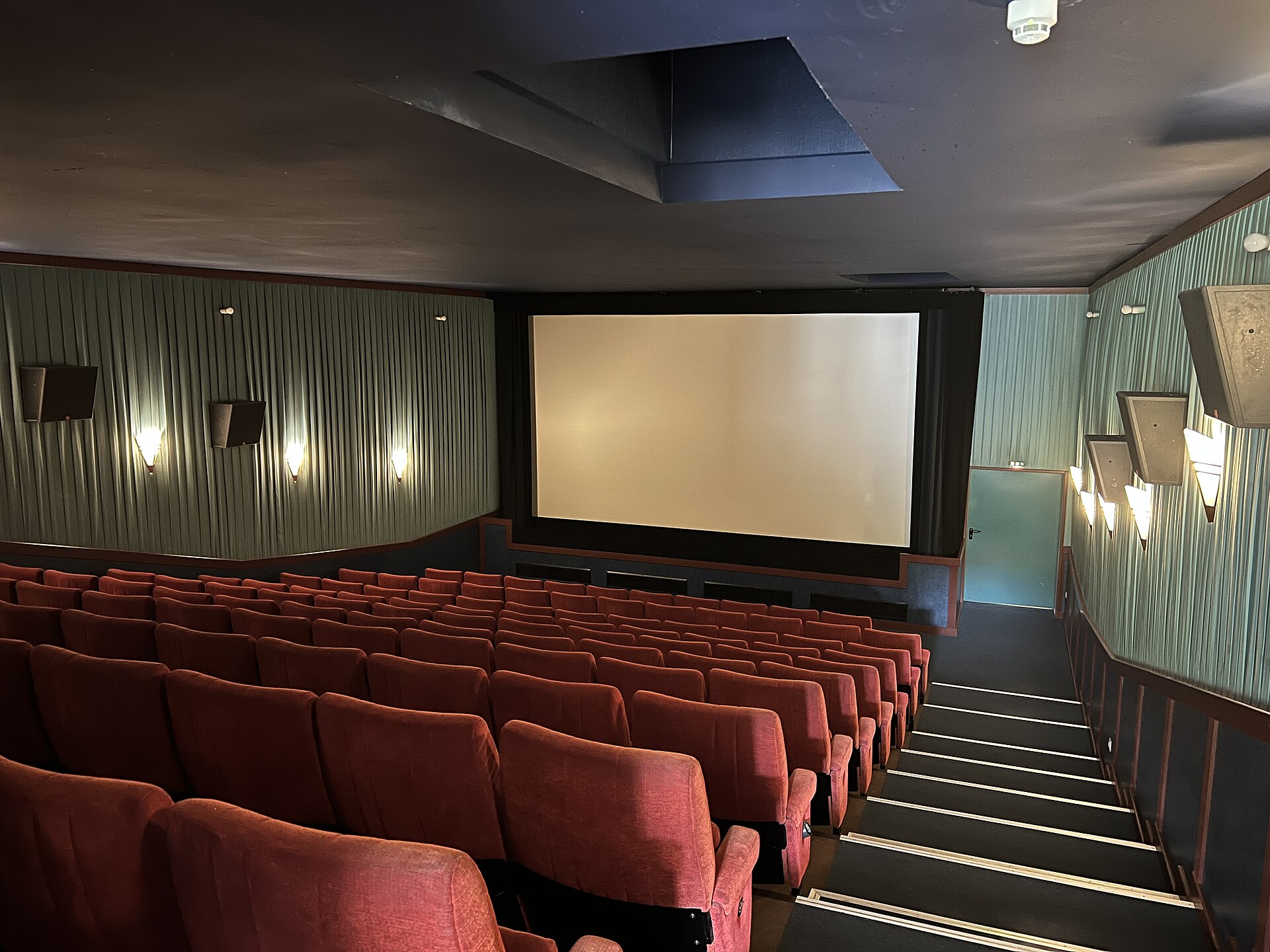
- See them in a cinema when you can. The long take was designed for a dark room and a large screen, where a static frame becomes something to explore rather than a pause.
- Put the phone in another room. The rhythm of a slow film depends on continuity, and a single glance at a notification breaks it.
- Start short. Old Joy or Goodbye Dragon Inn (81 minutes) build the habit before you try a seven-hour epic.
- Accept the wandering mind. Drifting attention is part of the experience. Many viewers find that a film they struggled with returns to them days later.
- Plan the long ones. Set aside a whole afternoon or evening for Sátántangó, and check whether a screening includes breaks before you book.
Festivals have championed the form in the UK. In 2012 the AV Festival in the North East ran a Slow Cinema Weekend at Newcastle's Star and Shadow Cinema, featuring Ben Rivers, Lav Diaz, Lisandro Alonso and Fred Kelemen. The Guardian's report on Rivers' Two Years at Sea, filmed with one man in a remote Aberdeenshire farmhouse, is a good portrait of how such films are made.
Why it still matters
Slow cinema keeps a question open that faster films close down: what happens when nothing is cut away. With Tarr gone and a slow film at the top of the most influential critics' poll, the debate about duration is far from settled. For more of our film and culture coverage, browse artculture.uk, and for criticism and documentary perspectives visit mariabregman.com.
Photo: Lukas Beck, CC BY 4.0, via Wikimedia Commons