
By Anna Zhila
Paris Fashion Week closed on 6 October 2026 after nine days of womenswear spring–summer 2027: 101 houses on the official calendar of the Fédération de la Haute Couture et de la Mode, with 68 runway shows and 33 presentations. Read as an art calendar rather than a trade one, the season kept returning to the same question London asked a fortnight earlier — where does the work actually happen: on the body, in the room, or on the screen that carries it afterwards?
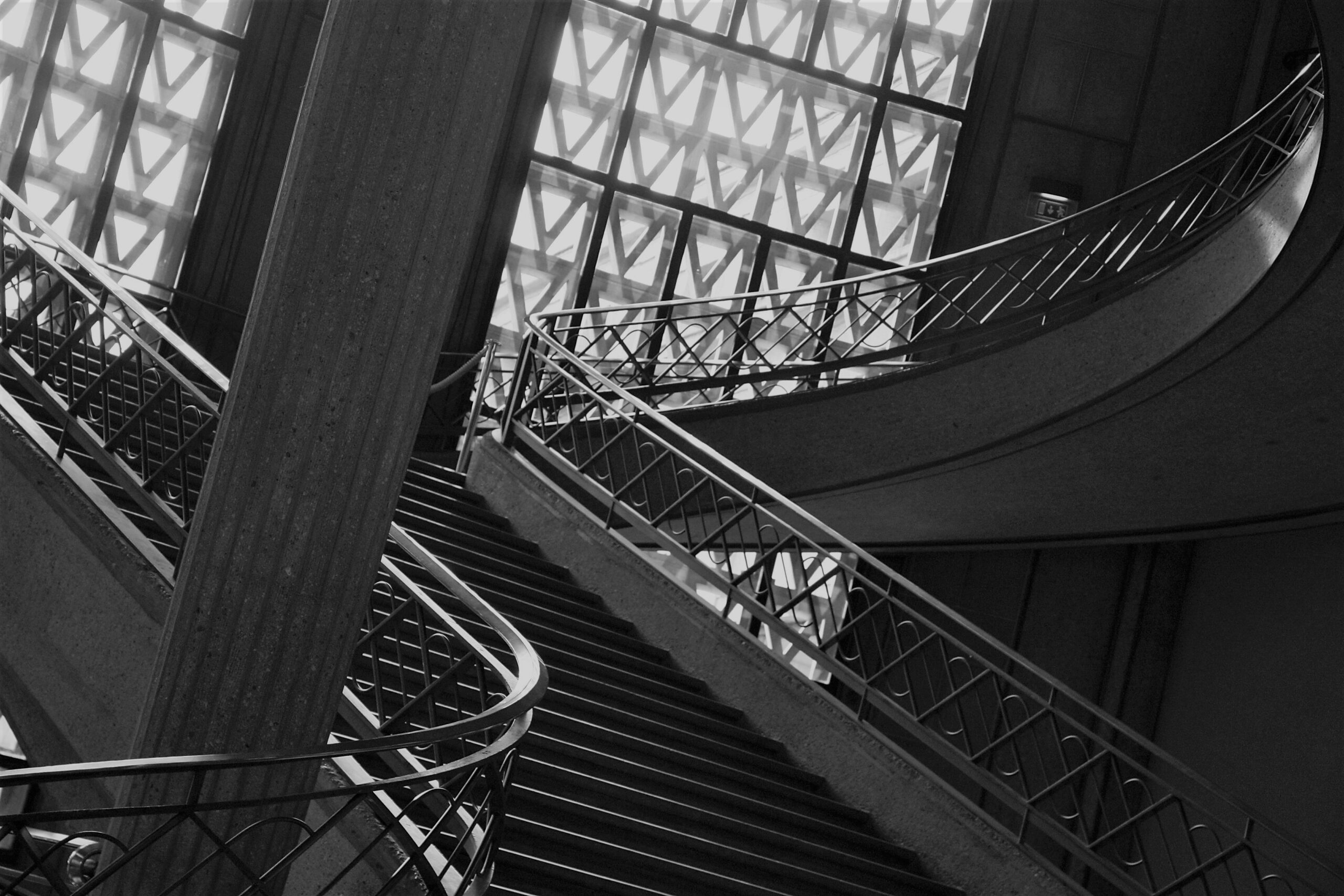
The Parisian answer this season was architectural. The most telling venue was not a stadium set or a palace courtyard but a concrete monument on the Chaillot hill: the Palais d'Iéna, where Miu Miu showed its spring–summer 2027 collection on Sunday 4 October at 1 p.m. CEST, streamed live from Paris.
A concrete monument that keeps changing jobs
The Palais d'Iéna was designed by Auguste Perret and built in 1937–1939 for the 1937 Exposition, originally as the Musée des Travaux Publics — a museum for models of dams, bridges and lighthouses. Perret's doctrine, as the building's own custodian puts it, was that concrete is sufficient unto itself: slender columns tapering inward, a play of shadow and light across concrete mixed with green porphyry and pink marble. The museum opened in 1939; since 1959 the building has housed the Conseil économique, social et environnemental, the republic's third constitutional assembly, and it has been a listed historic monument since 1993.
Fashion arrived later, and the building absorbs it without effort. The famous hypostyle hall — the forest of columns at the heart of Perret's plan — has become Miu Miu's habitual setting: the house's own account of a previous season describes the scenography transforming the hypostyle into an abstraction of everyday life, punctuated by fields of Formica tables. A room built to exhibit bridges now exhibits clothes, and the exchange flatters both sides. The monument lends the show gravity; the show gives the monument a second public. The casting underlined the point: Oscar winner Olivia Colman, 52, walked the Miu Miu show in a black leather suit — fitted blazer, below-knee skirt, blue jumper with a deep V-neck — her grey hair pulled into a loose ponytail. The actress as exhibit, the catwalk as stage: spectacle in the literal sense.
That traffic runs in both directions this month. A fortnight after Paris Fashion Week closed, the same building hosts part of Art Basel Paris 2026: Alice Diop's Geste de Consolation, a curatorial exhibition bringing together Black women artists, takes over the Palais d'Iéna from 21 to 25 October with free admission, as part of the fair's public programme. The fashion audience and the art audience will have stood in the same concrete hall within three weeks of each other — and Miu Miu itself is the official partner of that public programme. The boundary between a runway and an exhibition here is not a wall but a schedule.
The wider art context: Art Basel Paris
Art Basel Paris runs its fifth edition this year — the first under director Karim Crippa — from 23 to 25 October under the glass roof of the Grand Palais, with 211 exhibitors from 41 countries and territories. The public programme spills across the city: a bronze flock of birds by Lionel Sabatté in Square Jean Perrin, Robert Indiana's LOVE wall on Place Clemenceau, eight monumental projects along Avenue Winston Churchill.
For an art reader, the dates matter. Paris now stages fashion week and art week as a single extended season: nine days of shows ending 6 October, then the fair's public programme opening around 20 October. The city sells the same proposition twice — come and look at new work in monumental rooms — to two audiences that increasingly overlap. The houses know it: evening slots, invitation-only rooms and livestreams are stagecraft borrowed from the museum world, and the museums return the compliment by timing openings to the fairs.
The nightclub and the tuxedo: Schiaparelli
If Miu Miu made the case for the monument, Schiaparelli made the case for the theatre. On Thursday 1 October at 7 p.m., Daniel Roseberry presented the spring–summer 2027 collection on a set designed like a nightclub: chairs around little tables placed along a circuitous runway, chandeliers above creating an after-dark atmosphere, with a 1962 live recording of Streisand ad-libbing cuing up the show.
The clothes matched the staging note of stripped-back drama: sharp separates in a largely monochrome palette, a backward tuxedo dress opening the show, bodysuits cut to plunge, frills framing little black dresses. After seasons of surrealist maximalism, Roseberry returned to essentials — tailoring with the house's appetite for drama intact. The nightclub was not decoration; it was the argument. A collection about evening life shown as an evening out, with the audience seated as participants rather than witnesses.
Debuts and returns
The season's personnel news gave the spectacle its plot. Drew Henry presented a first show for Courrèges on 30 September; Kai Nesselrath debuted at Carven on 1 October. Henry's debut leaned into casting as performance: a trio of short A-line mini dresses — a mod nod to the house's history — was shown on male models, a choice at least one front-row review called needlessly gimmicky, which is itself a measure of its stage effect. Lenta's fashion-week roundup, working from a WWD editor's Instagram footage, reports the same device pushed further at Vivienne Westwood on 3 October: male models in toga-like dresses, including a sheer thigh-slit style and a voluminous white draped dress whose wearer lifted the hem to show tattooed legs. Valentino returned to the Paris calendar after showing its previous collection in Rome, and Maison Margiela rejoined after presenting in Shanghai. Around them stood the fixed points that structure the week: Dior on 29 September, Balenciaga and Schiaparelli on 1 October, Hermès and Celine on 3 October, Chanel on 5 October at 8 p.m., and Louis Vuitton closing on 6 October at 6.30 p.m.
Debuts are the fashion equivalent of a first solo show: the audience knows the house vocabulary better than it knows the new author, and the interest lies in what survives. That two such handovers happened in one week — while two major houses came home to Paris — is why this edition felt like a season about authorship rather than hemlines.
What it means for the visual scene
Three things are worth holding on to.
The first is that the venue has become part of the work. When a show takes place in Perret's hypostyle or a staged nightclub, the room is not a container but a collaborator — scenography doing what installation does in a gallery. The houses that understand this produce images that outlive the eight-minute show.
The second is the calendar effect. Fashion week ending 6 October and Art Basel Paris opening its public programme around 20 October, in some of the same buildings, turns Paris into a month-long exhibition with two vernissages. For anyone writing about visual culture, the two weeks belong in the same review.
The third is the audience contract. An invitation-only show streamed live to the world, a free exhibition in the same hall two weeks later: scarcity and access staged as carefully as the clothes. The spectacle is no longer the dress alone but the whole apparatus — room, stream, front row, timing — through which the dress is seen.
None of this will be reviewed as art. All of it is.
Photo: Palais d'Iéna, Paris. Arthur Weidmann, CC BY-SA 2.0, via Wikimedia Commons.
Sources
- FHCM official calendar: Paris Fashion Week womenswear spring–summer 2027, 28 September – 6 October 2026; 101 houses, 68 shows, 33 presentations
- Vogue, 24 July 2026 (provisional schedule; Courrèges and Carven debuts); Vogue, 2 October 2026 (Schiaparelli show: nightclub set, chandeliers, 1962 Streisand recording)
- The National, 5 October 2026 (fourteen defining shows; Schiaparelli backward tuxedo dress, monochrome palette)
- Miu Miu official channels (spring–summer 2027 show, 4 October 2026, 1 p.m. CEST, Palais d'Iéna, livestream)
- Lenta.ru, 7 October 2026, 17:53 (upd. 18:07), by Alina Gosteva (Olivia Colman, 52, walked the Miu Miu show at Paris Fashion Week in a black leather suit with blue jumper and brown mules, grey hair in a loose ponytail; via Vogue Germany Instagram; photo Estrop/Getty Images). No contradictions with the draft's Miu Miu / Palais d'Iéna facts; the Colman casting detail is incorporated above.
- Lenta.ru, 7 October 2026, 17:08 (upd. 17:26), by Alina Gosteva (male models in dresses at Vivienne Westwood — toga-like styles, sheer thigh-slit, floral print, white draped dress, gladiator-sandal hybrids — via a WWD fashion director's Instagram video, photo IK ALDAMA/Legion-Media; Courrèges A-line mini dresses on male models as unisex accent; references an earlier Lenta piece on a thong look at Tom Ford, not supplied and not used). The Courrèges half is independently corroborated by Daily Front Row (1 October 2026: trio of short A-line dresses shown on male models); the Westwood half rests on the single Instagram-sourced report and is attributed accordingly in the body.
- CESE / lecese.fr (Palais d'Iéna: Perret, 1937–1939, Musée des Travaux Publics, CESE seat since 1959, listed 1993)
- Grand Palais and Paris je t'aime tourist office (Art Basel Paris 2026: 23–25 October, Grand Palais, 211 exhibitors from 41 countries, 5th edition, first under Karim Crippa; public programme at Palais d'Iéna, Alice Diop's Geste de Consolation, 21–25 October, free admission; Miu Miu as official partner of the public programme)




.jpg)