By Rajat Kanti Satpati
My journey into European literature began with a farm.
I was twenty-one, living in India and searching for books about authoritarian government. That search led me to George Orwell. I picked up Animal Farm without knowing that a book about a farm could become part of the way I understood political power.
I grew up in a farming family, and my family still has a farm. The setting was immediately familiar to me: animals, fields, labour, the ordinary arrangements of rural life. Then the story turned that familiar world into something else. By the end, when the animals can no longer distinguish the pigs from the men, the farm had become a place where power could disguise itself in ordinary language and ordinary habits. I later read 1984. Orwell changed the way I looked at political language and authority.
I found Dostoevsky differently. I was reading existential literature when I came to Notes from Underground. Then came White Nights. What stayed with me was the dreamer's relationship with St Petersburg. He moves through the city with such intensity that his loneliness seems to alter the streets themselves. After reading it, I began looking at my own city differently. Streets, buildings and familiar places could carry a person's inner life. A city could become part of a consciousness.
Then there was Crime and Punishment, and Raskolnikov's guilt. His struggle made me think about the distance between an idea and the human being who has to live with its consequences.
I read Albert Camus at the end of my university life, when I had begun my own inquiry into life and its meaning and was going through a difficult existential period. I began with A Happy Death, then read The Plague and other works. Camus gave form to a question I had already begun asking: how does a person live when the world offers no final explanation for existence?
The history connecting Europe and India was hardly invisible to me. Britain had ruled India, and European political ideas had entered Indian public life in complicated ways. The history of empire had already connected our worlds long before I encountered European literature. Yet reading these writers gave me a different kind of contact with Europe. I was approaching particular cities, people and societies through the intimate scale of individual lives.
A history can show the forces that connect societies. Literature can bring us close to the uncertainty of a person living within those forces.
This is one reason literature travels so strangely. A novel carries a particular consciousness, a voice, a conflict, a landscape seen from one person's position. Through that limited view, a reader can begin to imagine a society without reducing it to a description. The foreign enters the mind in fragments.
Perhaps this is also why literary influence is difficult to measure. A book may leave behind a sentence, an image, a question, a way of looking at a street, a suspicion about power or a discomfort with an easy answer. Years later, the original source may have disappeared from conscious thought while the habit of thinking remains.
I have often wondered what kind of relationship this creates between a reader and a place.
We usually speak of inheritance in terms of things that come to us through birth. We inherit a language, a family history, a landscape, customs and memories. Literature creates another route. A person can inherit something from people they never met, from societies they never entered and from centuries that ended before they were born.
This inheritance is particularly strange because it does not arrive as a complete package. A reader chooses what enters it. One writer may leave a question. Another may leave a method of doubt. Another may make a particular kind of suffering visible. Another may change the way a reader understands freedom, love, death or responsibility. The reader then carries these things into a life shaped by another history.
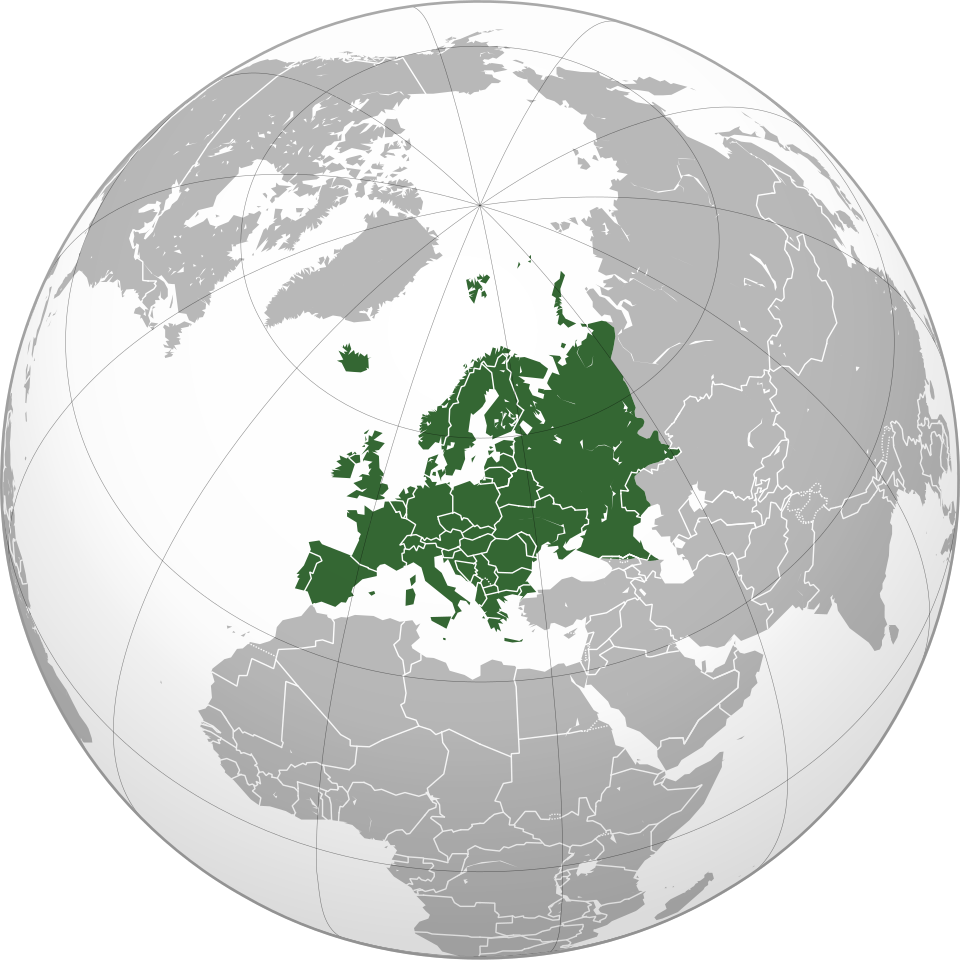
The Europe I encountered in books was never a single Europe. Orwell's England, Dostoevsky's Russia and Camus's Algeria and France belonged to different historical and intellectual worlds. Later I encountered other European voices, including Virginia Woolf and Claire Keegan, and the differences became even more apparent. The more I read, the less useful the idea of Europe as a single cultural object became.
Yet something had already happened.
Europe had become part of my intellectual geography.
A novel can travel across geography, language, century and political history. Its questions can enter a new life and acquire meanings shaped by circumstances the author could never have known. A book can cross a border unchanged and still become something different in the mind of the person who reads it.
That process gives literature a peculiar relationship with time. It allows a writer from another century to participate in the intellectual life of someone born much later. A writer who died long before I was born can enter an argument taking place inside my mind. The encounter continues even after the historical circumstances that produced the book have disappeared.
Several histories can become present in the same mind. They can disagree with one another. They can complicate a person's sense of belonging. They can create intellectual relationships that geography alone could never have produced.
Perhaps that is why I think of European literature as an inheritance rather than a destination.
I was born into one history and educated within another set of historical circumstances. Books allowed other histories to enter my consciousness.
They gave me people to argue with, cities to imagine, ideas to question and questions that continued after the books were closed.
The inheritance remains unfinished. Every generation receives literature differently because every generation brings different questions to it.
My Europe began with a farm in India.
I have carried it ever since, in fragments: a political suspicion, a city seen through loneliness, a struggle with guilt, a confrontation with uncertainty, and the voices of writers who became part of my inner history without ever knowing that I existed.
That may be the peculiar privilege of literature. It allows us to inherit from strangers.

Rajat Kanti Satpati is an author of several books, essayist and researcher from India. His writing spans literature, history, political ideas, economic life and society.