By Anna Zhila
In December 1933 two small steamers slipped down the Elbe carrying the intellectual cargo of a vanishing Germany. Aboard the Hermia and the Jessica were 531 boxes holding some 60,000 books and 25,000 photographs, along with the shelving and card indexes that gave them order. This was the entire working apparatus of a private research library that had spent a quarter of a century mapping how images carry meaning across time. Ten months earlier Hitler had become Chancellor. The library's staff understood what was coming, and they moved quickly.
The collection belonged to the Kulturwissenschaftliche Bibliothek Warburg, the cultural-science library of the Hamburg art historian Aby Warburg. Its rescue is one of the great salvage operations in the history of scholarship. Today the collection is the Warburg Institute, part of the University of London, and in the autumn of 2024 it reopened after the most ambitious rebuilding in its ninety-year London life.
The banker's son who chose books
Aby Warburg (1866-1929) was the eldest son of one of Hamburg's great Jewish banking dynasties, the house of M.M. Warburg & Co. As the firstborn he was expected to run the bank. The often-repeated family account has it that, around the age of thirteen, he offered his birthright to his younger brother Max in exchange for a single promise: that Max would buy him every book he ever wanted. Max agreed. It became an open-ended line of credit that the family would honour for the rest of Aby's life, and he spent it building the strangest library in Europe.
Warburg trained as an art historian but had little patience for a discipline then preoccupied with attribution and connoisseurship. His true subject was the Nachleben der Antike, the afterlife of antiquity, meaning the way the gestures, emotions and symbols of the ancient world kept resurfacing in later art, from the fluttering draperies of Botticelli to the astrology of the Renaissance courts. He coined a term for these charged, recurring images of heightened feeling: the Pathosformel, or pathos formula, a visual formula for extreme emotion that artists reuse, knowingly or not, across the centuries.
His curiosity reached well beyond Europe. In 1895 and 1896 he travelled through the American Southwest to observe the Pueblo and Hopi peoples and their ritual life, including the serpent dance performed as a prayer for rain. That journey later saved him, in a manner of speaking. After the First World War Warburg suffered a severe psychotic breakdown and spent years as a patient of the psychiatrist Ludwig Binswanger at the Kreuzlingen sanatorium in Switzerland. In April 1923, to prove he had regained his reason, he delivered a lecture on the Hopi serpent ritual to the staff and fellow patients. The argument held together, he was eventually released, and the lecture is now read as one of the most influential art-historical texts of the twentieth century.
Warburg described himself, in a formula that has followed him ever since, as "a citizen of Hamburg at heart, Jewish by blood, Florentine in spirit". The library he built was an attempt to hold all three of those loyalties in one room.
A library built like a mind
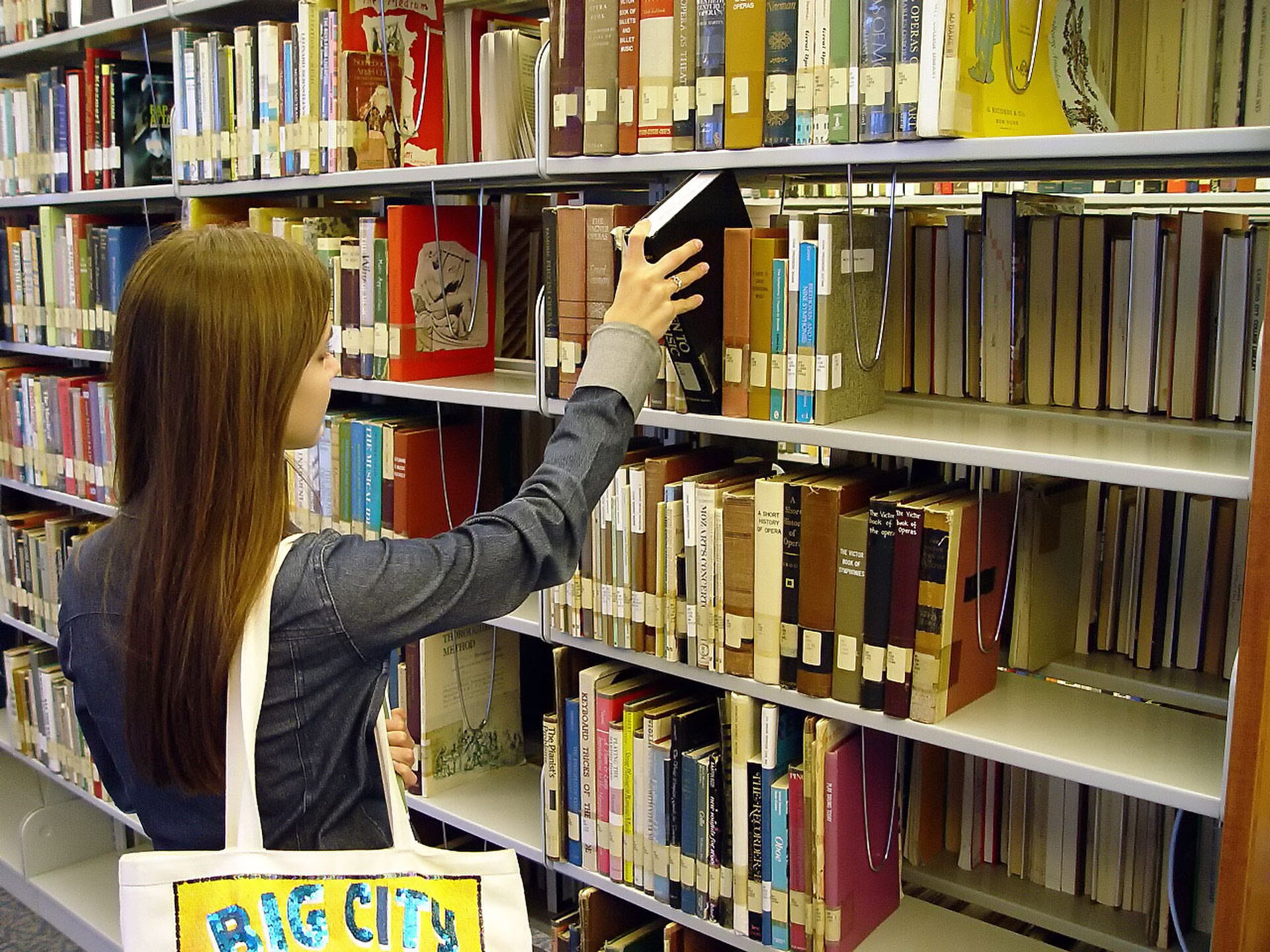
By the time Warburg opened a purpose-built reading room in Hamburg in 1926, with its famous elliptical hall, the library held tens of thousands of volumes arranged on a principle found nowhere else. He rejected conventional subject cataloguing. Books were shelved according to what he called the law of the good neighbour, the conviction that the book you need is frequently not the one you came looking for but the one standing next to it.
Gertrud Bing, his assistant and a later director of the Institute, described the effect this shelving was meant to produce. "The manner of shelving the books is meant to impart certain suggestions to the reader who, looking on the shelves for one book, is attracted by the kindred ones next to it, glances at the sections above and below, and finds himself involved in a new trend of thought which may lend additional interest to the one he was pursuing."
The library was, and still is, ordered around four broad themes rather than academic departments: Image, covering the history of art; Word, covering language and literature; Orientation, gathering religion, philosophy, magic and science; and Action, meaning social and political life. The shelving was itself an argument, insisting that human culture is one continuous, interconnected fabric and that the borders between disciplines are conveniences rather than truths. In Hamburg the library became a magnet for scholars including the philosopher Ernst Cassirer and the art historian Erwin Panofsky.
Mnemosyne, left unfinished
In his final years Warburg poured his energy into his most ambitious and most enigmatic work, the Bilderatlas Mnemosyne, named for the Greek goddess of memory and mother of the muses. It took the form of large wooden panels covered in black cloth, onto which he pinned and endlessly repinned photographs. On a single panel he might set a Babylonian relief beside a Renaissance fresco beside a contemporary newspaper cutting or an advertisement, letting the images speak to one another with almost no accompanying text. The aim was to make the migration of visual memory across the centuries directly visible.
He was still rearranging the panels when he died in October 1929. The final state of the project, photographed shortly after his death, ran to 63 panels carrying 971 images. Nearly a century on, that unfinished atlas remains one of the most studied and most imitated objects in the modern humanities, a working diagram of how culture remembers itself.
Five hundred boxes down the Elbe
Warburg's death left his library in the hands of Fritz Saxl (1890-1948), a Viennese art historian who had joined him in 1913 and had already done much to turn a private collection into a working research institute. When the Nazis came to power, a Jewish cultural library in Germany had no future, and Saxl grasped this earlier than most. He arranged its removal, and in December 1933 the collection made its slow passage down the Elbe on the Hermia and the Jessica, bound for England.
In London the exiles found a series of temporary homes, first at Thames House on Millbank, then in the Imperial Institute buildings in South Kensington. The University of London took the collection in permanently in 1944, and in 1958 rehoused it in a purpose-built modernist block by the architect Charles Holden in Woburn Square, in Bloomsbury, where it stands today.
Exile turned a private German library into a global institution. It trained and sheltered a remarkable succession of scholars. Saxl and Bing were followed as director by Ernst Gombrich, whose account of the founder, "Aby Warburg: An Intellectual Biography" (1970), he described as "not so much the history of his life as an intellectual biography". The historian Frances Yates wrote her landmark studies of Renaissance memory systems and hermetic philosophy in its reading rooms. The habits of thought forged there, attentive to symbol, survival and the movement of images between high and popular culture, helped shape the field now taught as visual culture. A library that Germany tried to make homeless became one of the intellectual engines of British and international scholarship.
The Warburg Renaissance
By the 2010s the Woburn Square building was showing its age, and much of it was closed to anyone without an academic pass. Under its director Bill Sherman the Institute launched the Warburg Renaissance, a £14.5 million rebuilding entrusted to the Stirling Prize-winning practice Haworth Tompkins. Work ran from 2022 to 2024.
The scheme preserved Holden's original fabric while opening the place up. It added a 140-seat auditorium, a new centre for special collections and, for the first time in the Institute's history, a public gallery, along with a light-filled entrance and refreshed spaces for study and events. The declared purpose was to keep Warburg's ideal of open browsing intact while finally letting the wider public through the doors. The Institute reopened in October 2024, no longer a closed refuge for specialists but a cultural venue in its own right, with exhibitions and an artistic programme built around its extraordinary holdings.
Why it still matters
There is a hard symmetry in the story. A library devoted to cultural memory was very nearly erased by a regime that specialised in erasure, and it survived because a handful of people packed it into boxes and sent it across the sea. What crossed the Elbe in 1933 was not only 60,000 books but a method, and a conviction that the images a society makes are the deepest record of what it fears and desires.
Warburg's law of the good neighbour reads differently now than it did in Hamburg. In an age when knowledge arrives sorted by machines that show us more of whatever we last clicked, a library deliberately built to make readers stumble into the unexpected is quietly radical. It was designed to defeat exactly the kind of narrowing that our tools encourage. The renovated building in Bloomsbury, open at last to anyone who walks in, keeps that idea alive. The steamers are long gone, but the argument they carried down the Elbe is still on the shelves, waiting for the next reader to reach for one book and be caught by its neighbour.