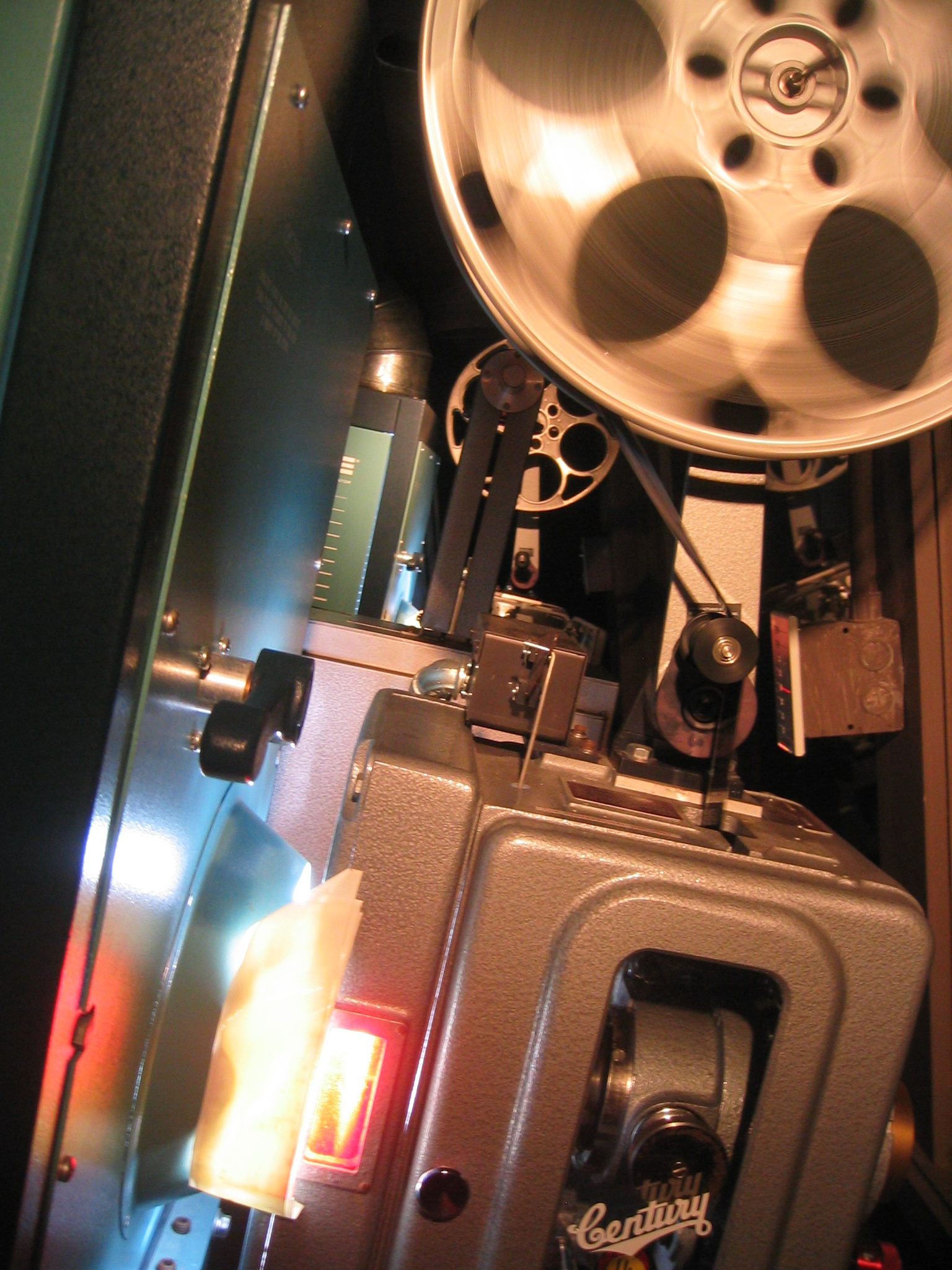
Physical media matters for film collectors because a disc you own keeps playing whatever happens to licensing deals, while a streamed or digitally "bought" film can be withdrawn by the platform. Discs also carry more picture and sound data than most streams, and they bundle restorations, commentaries and booklets that rarely survive online. UK buyers seem to agree: disc sales fell only 4.7% in 2025, the slowest decline since 2010, and 4K UHD sales grew by almost a fifth.
Physical media for film collectors at a glance
- Access. A disc does not depend on a rights deal, a subscription or an account. Digital purchases are licences, and the terms say so.
- Quality. An Ultra HD Blu-ray can deliver video at up to 128 Mbps. Netflix recommends a connection of 15 Mbps for its 4K streams.
- Context. Specialist labels add new restorations, archive extras and printed essays, often only on first pressings.
- Market. UK disc sales were £148.9m in 2025, with Blu-ray (including 4K) ahead of DVD (checked October 2026).
- Limits. Discs need careful storage and working players, and they are not a permanent archive on their own.
What you actually own when you buy digitally
The brief version of the argument says streaming is a licence and a disc is a purchase. The fuller picture is starker: even films you "buy" on a digital store are licences. Amazon's Prime Video Terms of Use state that purchased digital content "will generally continue to be available" but "may become unavailable due to potential content provider licensing restrictions or for other reasons, and Amazon will not be liable to you" if that happens.
That clause has been tested in practice. In December 2023 PlayStation told owners that Discovery programmes they had paid for, including Deadliest Catch and MythBusters, would be removed from their libraries on 31 December 2023. After an outcry, Sony said it had updated its agreement with Warner Bros. Discovery so that buyers could keep access "for at least the next 30 months", as Thurrott reported. That is a reprieve with an end date, not ownership.
Lawmakers have noticed. California's AB 2426, signed by Governor Gavin Newsom on 24 September 2024, has required sellers since 1 January 2025 to disclose clearly when a digital "purchase" is only a revocable licence, according to a Morgan Lewis briefing on the law. It applies to sales in California, not the UK, but it shows how far the word "buy" has drifted from its usual meaning.
Why titles vanish from streaming services
Subscription catalogues change for commercial reasons that have little to do with whether a film is any good. Licences expire, owners move titles to their own services, and some companies remove content to cut costs. In May 2023 Disney began pulling dozens of series from Disney+ and Hulu worldwide, including Willow and Y: The Last Man, as Deadline reported. The move came with a content impairment charge of $1.5 billion to $1.8 billion, announced on the company's earnings call of 10 May 2023. Chief financial officer Christine McCarthy described it as a review of content "to align with the strategic changes in our approach to content curation".
Collectors of particular directors or national cinemas feel this most. A commercial service has no duty to keep a 1960s British B-movie or a regional documentary online, and nothing obliges a title to come back once it has gone. A disc on the shelf removes that dependency. It does not remove every risk, as the storage section below explains, but the decision about whether a film stays available passes to you.
Picture and sound on disc compared with streaming
The technical gap is real, though it is easy to overstate. The Blu-ray Disc Association says Ultra HD Blu-ray comes as a 66GB dual-layer disc or a 100GB triple-layer disc, with video at up to 108 Mbps and 128 Mbps respectively. Standard Blu-ray allows a maximum audio and video bitrate of 48 Mbit/s, according to the format summary on Wikipedia's Blu-ray page. The same specification includes lossless audio formats such as Dolby TrueHD and DTS-HD Master Audio, alongside uncompressed LPCM.
By comparison, Netflix's own recommended internet speeds are 5 Mbps for 1080p and 15 Mbps for 4K. That figure is a connection recommendation rather than the exact bitrate of each stream, but the order of magnitude is telling. More data gives a disc more room for fine grain, deep shadows and smooth gradients in skies and smoke, where heavy compression tends to show banding or blocky artefacts.
How much you notice depends on the screen, the speakers and the film. A grainy 16mm documentary or a high-contrast black-and-white noir benefits more than a brightly lit sitcom. A disc also plays the same way every time, without adapting its quality to a busy home network.
Restorations, extras and the editions worth seeking
For many collectors the extras matter as much as the bitrate. Specialist labels treat a release as a small piece of publishing. The BFI's October to December 2026 slate includes a new 4K restoration of Halas and Batchelor's Animal Farm (1954), mastered from the original 35mm successive frame negative held in the BFI National Archive, and Pasolini's Salò on 4K UHD with a separate Blu-ray of extras. The BFI says each title carries extra features and "an illustrated booklet (first pressing only)".
Earlier in the year the BFI's January to March 2026 releases included a 3-disc, 5-film collection of Frederick Wiseman documentaries made between 1967 and 1975, their first UK release, and Vernon Sewell's Strongroom (1962) on Blu-ray for the first time in a new BFI remaster. Titles like these show where physical media earns its keep: films that a mass-market service would struggle to justify, presented with scholarly context.
When judging an edition, look for:
- the source of the master (new 4K scan, original negative, or an older transfer);
- who made the extras, and whether they are new or carried over;
- whether a booklet or essay is limited to the first pressing;
- the region code, which matters for Blu-ray bought from abroad.
On that last point, the Blu-ray specification requires players to enforce regional coding, but distributors need not use it, and many major-studio Blu-rays are released region-free. Check the packaging or the label's listing before importing.
The UK disc market in 2025 and 2026
The numbers behind the argument are more encouraging than headlines about the "death of the disc" suggest. The Entertainment Retailers Association's 2025 market figures, published on 6 January 2026, put UK physical video sales at £148.9m, down 4.7% after an 8% fall in 2024. Blu-ray, including 4K UHD, took £84.2m against £64.7m for DVD. ERA chief executive Kim Bayley pointed to "a sharp fall in the rate of decline as studios and retailers lean into physical's distinctive benefits of quality and collectability" (checked October 2026).
Industry body BASE added detail, reported by Film Stories: the 4K UHD market grew 19.5% in 2025, and Steelbook editions, about one in ten 4K releases at an average price of £32, took almost £2 of every £10 spent on the format. The same report notes that Universal now licenses its UK physical titles to Spirit Entertainment, that Warner signed with Elevation Sales, and that Tesco has returned to selling films on disc after dropping them in 2022.
Not every signal is positive. Sony stopped making recordable Blu-ray discs, MiniDiscs and MiniDV cassettes in February 2025, citing falling demand. As ecoustics explained, that affected blank media only, not the pressed films sold in shops.
How to store and care for a disc collection
Discs last well if you treat them properly, but they are not indestructible. The US National Archives' guidance on storing video at home says to store optical discs vertically in their plastic cases, keep them out of sunlight and other ultraviolet light, and avoid adhesive labels and solvent-based markers. It suggests a stable home environment of 55 to 70°F (about 13 to 21°C) and 30 to 55% relative humidity, and warns against attics and garages.
The Library of Congress audiovisual preservation FAQ adds two cautions. Basements, attics and garages are unsuitable because of poor temperature and humidity control and a higher risk of leaks. And playback machines "eventually become obsolete", so a long-term collection needs a plan for equipment as well as discs. For the technical detail, NIST's Care and Handling of CDs and DVDs, written by Fred R. Byers for librarians and archivists, remains the standard reference.
In practice:
- Handle discs by the outer edge, never the playing surface.
- Return each disc to its case straight after use.
- Shelve cases upright, away from radiators and sunny windows.
- Keep a working player, and consider a spare if you rely on an older format.
- Check older discs every few years, especially recordables.
Building a collection that lasts
Start with films you already return to, rather than speculative bulk buying. Priority goes to titles that are hard to find on any service, and to editions with a new restoration or genuinely useful extras. A cheap bare-bones disc of a film you love can still be the right purchase if no better version exists.
Streaming remains the better tool for discovery. Use subscriptions and festival screenings to find what you care about, then buy the films you want to keep. Keep a simple catalogue (title, edition, label, region, condition) so that you know what you have and avoid duplicates.
When buying second-hand, inspect the playing surface for deep scratches, check that booklets and inserts listed by the label are present, and confirm the region code. Limited editions and Steelbooks can command high prices once they sell out, but buy them for the film and the edition, not as an investment.
Frequently asked questions
Do I own a film I buy on a digital store?
Usually you buy a licence to watch it. Amazon's terms, for example, say purchased content may become unavailable because of licensing restrictions. A disc you own does not depend on that licence continuing.
Is a 4K disc really better than 4K streaming?
On a large screen with good speakers, usually yes. Ultra HD Blu-ray allows up to 128 Mbps and lossless audio, while Netflix recommends 15 Mbps for 4K. On a small television the difference is smaller.
Are discs still being made?
Yes. UK disc sales were £148.9m in 2025, 4K UHD sales grew, and labels such as the BFI continue to announce new restorations (checked October 2026). Sony's 2025 decision affected blank recordable discs, not film releases.
Photo: christian razukas from Honolulu, Hawaii, CC BY-SA 2.0, via Wikimedia Commons