Hundred Heroines is an independent museum and gallery in Nailsworth, Gloucestershire, and the only UK charity focused on women in photography. At the reopening of its Stardust exhibition in September, I saw the dialogue between past and present that the museum builds into everything it does. Drawing on the breadth of its historical archive, its youth workshops create a space that gives young creatives confidence and a reason to act. Working against a one-sided system and recovering a forgotten history, the women of several generations behind the organisation are leading figures for a more progressive future.

Stardust: two centuries of women behind the lens
The current exhibition shows the work of women photographers who defined the 19th and 20th centuries, presenting celebrities and members of the upper class in glamorous, sepia-toned portraits. Behind the familiar faces are photographers who shaped how generations received popular culture, yet have themselves remained largely overlooked in the history of the medium – not for any shortage of talent, but because most were never taken up by photographic institutions and galleries.
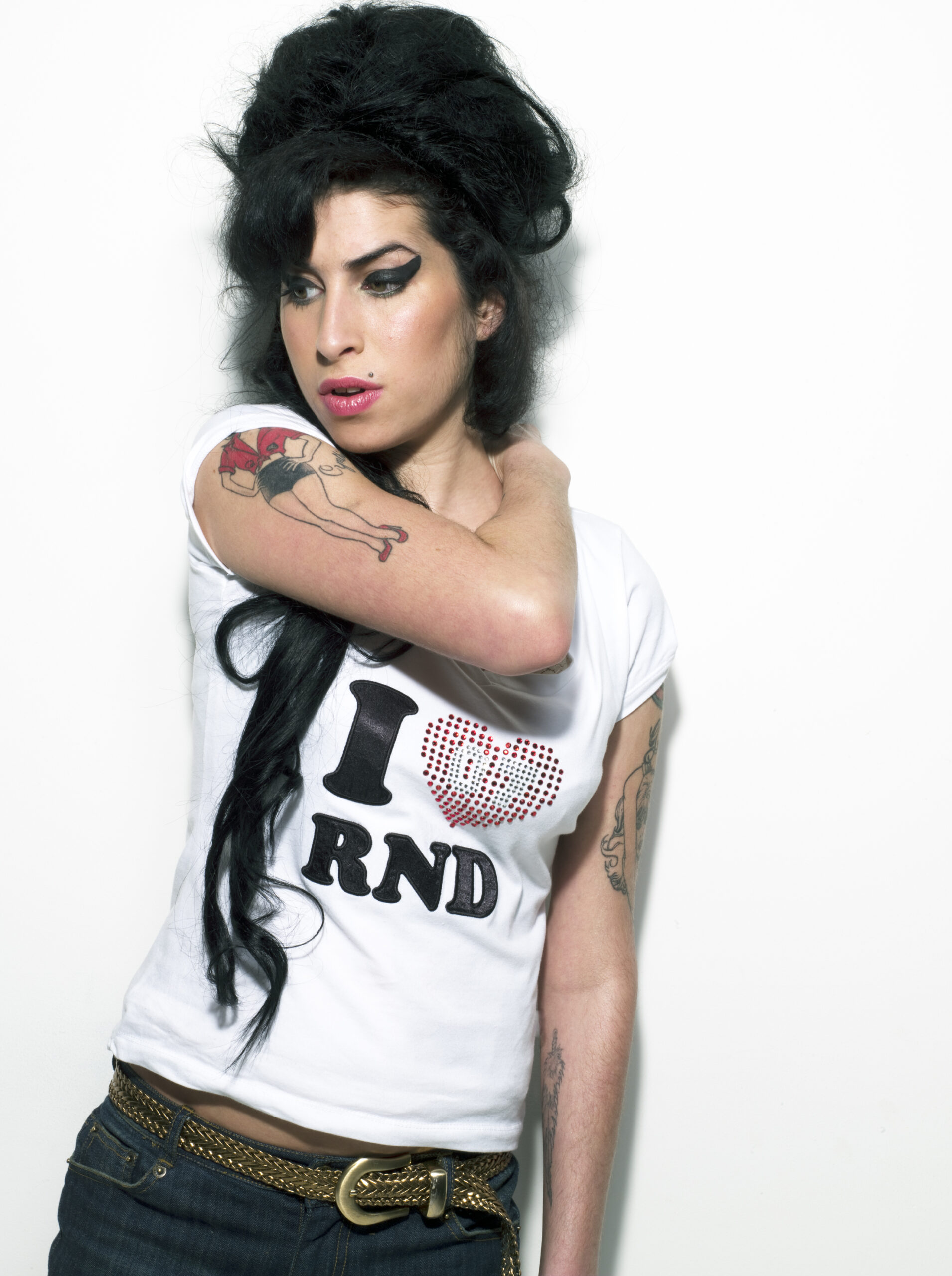
The other half of the exhibition is given to Jillian Edelstein's contemporary, personality-rich celebrity portraits. The heroines she captures, among them Sandra Oh, Amy Winehouse and Vivienne Westwood, take up just as much space as their male counterparts and are, as Edelstein puts it, "not needing to be validated or defined by men." The conditioned male gaze evident in some of the historical photographs stands out against Edelstein's empowering approach.

Edelstein's own career reflects the imbalance the exhibition sets out to correct. She recalled that when she worked as a press photographer in Johannesburg, she was given a byline as "Julian" rather than "Jillian." After the London offices of the African National Congress were bombed, she was told she could not cover the story: "Of course you can't go, because you're a woman." Stardust celebrates that progress in expression while honouring the under-represented women who defined 20th-century popular culture.

A network, not just a museum
Edelstein's story is not an isolated one. A study published in Nature Communications on 9 July 2026 found that only 36.5% of contemporary exhibiting artists are women, evidence of a system that still allocates visibility unevenly and, in turn, shapes careers. Magnus Resch, the art market economist behind the study, argues that "it's not about changing who gets bought but about who gets access to the networks where success is created." Hundred Heroines works as exactly this kind of network, helping young women close that gap.
Anaïs Clarke, the 20-year-old curator at Hundred Heroines and joint leader of its youth programme, is proof of it. While she was working as a freelance photographer, she says, an editor took advantage of her youth and inexperience and kept all the payment for a job on which she had shot every photograph. She had begun volunteering at Hundred Heroines and mentioned it there; the team helped her recover half of what she was owed. The community of women artists she found has been invaluable to Clarke, and her contribution has proved just as valuable in return, from securing a grant in her first week with the organisation to the youthful energy she has brought to the exhibition space. One visitor, reflecting that influence, said the show felt "like we've stepped out of the countryside and into London."

Del Barrett and a museum built without permission
The founder of Hundred Heroines, Del Barrett, gives the impression of someone who stopped asking permission a long time ago. In 2018, as vice-president of the Royal Photographic Society, Barrett was "horrified at how the men just kept being exhibited, getting the awards," and set out to change it. She led a campaign to find 100 inspirational women photographers worldwide, which drew nearly 5,000 public nominations. When the RPS decided the project was too niche for its own remit, Hundred Heroines became an independent museum in its own right. Inspired in part by Lucia Moholy, whose husband took credit for many of her photographs, Barrett built a network united by the belief that a fuller picture of photographic history is essential to moving forward as a society.
Having changed location three times, the museum has finally settled into what until recently was a woodworking shop, and Barrett admits that this exhibition is a dream realised. Her pride, however, is tempered by hardship. The organisation was hit hard by Covid-19, and the turbulence of three moves in quick succession forced it to cancel many events. It now operates with the ambitions of a city institution on the resources of a small-town one, surviving on volunteer support, donations and grants that, I was told, are "hard to come by." It needs donations to keep running the youth programme, preserve the archive and stage more exhibitions.
The archive: putting the stories back together
I spoke to the archivists behind the museum's physical collection, which holds 12,500 photographs and negatives gathered from attics and family collections around the world. Jenny Galor told me about a Bletchley Park codebreaker whose hundreds of beautifully documented prints the museum recovered, preserving both her images and a story that had nearly been lost. "Hundred Heroines exists to put back together the stories, not just the photographs but also the lost history," Galor says. "We're teaching the importance of documenting and record-keeping all parts of society."

Against a system that has long overlooked the female lens, the youth project, which runs workshops for schools and clubs, gives young women the tools, inspiration and confidence to use photography as a form of documentation and communication. Clarke says each workshop draws on the archive: children rummage through boxes of negatives, often picking up a camera for the first time. "Learning about these other women gives them so much confidence that they can be a woman in the art industry," she says. The visible effect on the young people involved, she adds, is "something the youth programme gives every single week." In creating a dialogue between generations of visual storytellers, Hundred Heroines shows how women-led and women-focused projects can provide a vital network and platform for the voices shaping our future.

What makes a heroine
The first time I met Anaïs Clarke, we spent some time discussing the meaning of the word "heroine," and found it more complicated than it looks. In traditional storytelling a heroine often evokes the damsel in distress, defined by her weakness and incomplete without a man by her side. In our conversation, though, we also found heroines in the suffragettes who, in her words, "f***ed s*** up and were loud and didn't care," and in "the quiet sacrifices of a mother." After four years of studying photography, Clarke left school unable to name a single woman photographer. What she knows now is that for many of them anonymity was self-protection: a name that could read as male carried a photograph further than a woman's signature ever would, and avoided the risk of the work being dismissed before it was even seen. "They had to be quiet." With the education she has now, Clarke defines heroines as "strong women, quiet or loud."
Practical information
- Exhibition: Stardust, until 20 November 2026. Entry is free.
- Address: Hundred Heroines, Unit 41a, Nailsworth Mills, Pensile Road, Nailsworth, Gloucestershire GL6 0BS
- Opening hours: Thursday to Saturday, 11:00–16:00; other times by arrangement via hundredheroines.org