By Anna Zhila
For nine days in September, the most interesting thing about London is not what it looks like but what it usually hides. Open House Festival runs from 12 to 20 September 2026, it is free, it reaches all 33 boroughs, and it is the thirty-fifth edition of an idea that began here and has since been copied across the world. Booking for ticketed activities is already open; the rest you simply walk into.
What has changed over those thirty-five years is not the scale, although the scale has changed a great deal. It is the centre of gravity. Open House began as a chance to get inside famous buildings. It has become something stranger and more useful: a chance to get inside the machinery that keeps a city of nine million running, most of which is designed specifically not to be looked at.
The machinery under the postcode
The most telling listings in a modern Open House programme are not the ones with famous architects attached. They are the energy centres, the pumping stations and the substations.
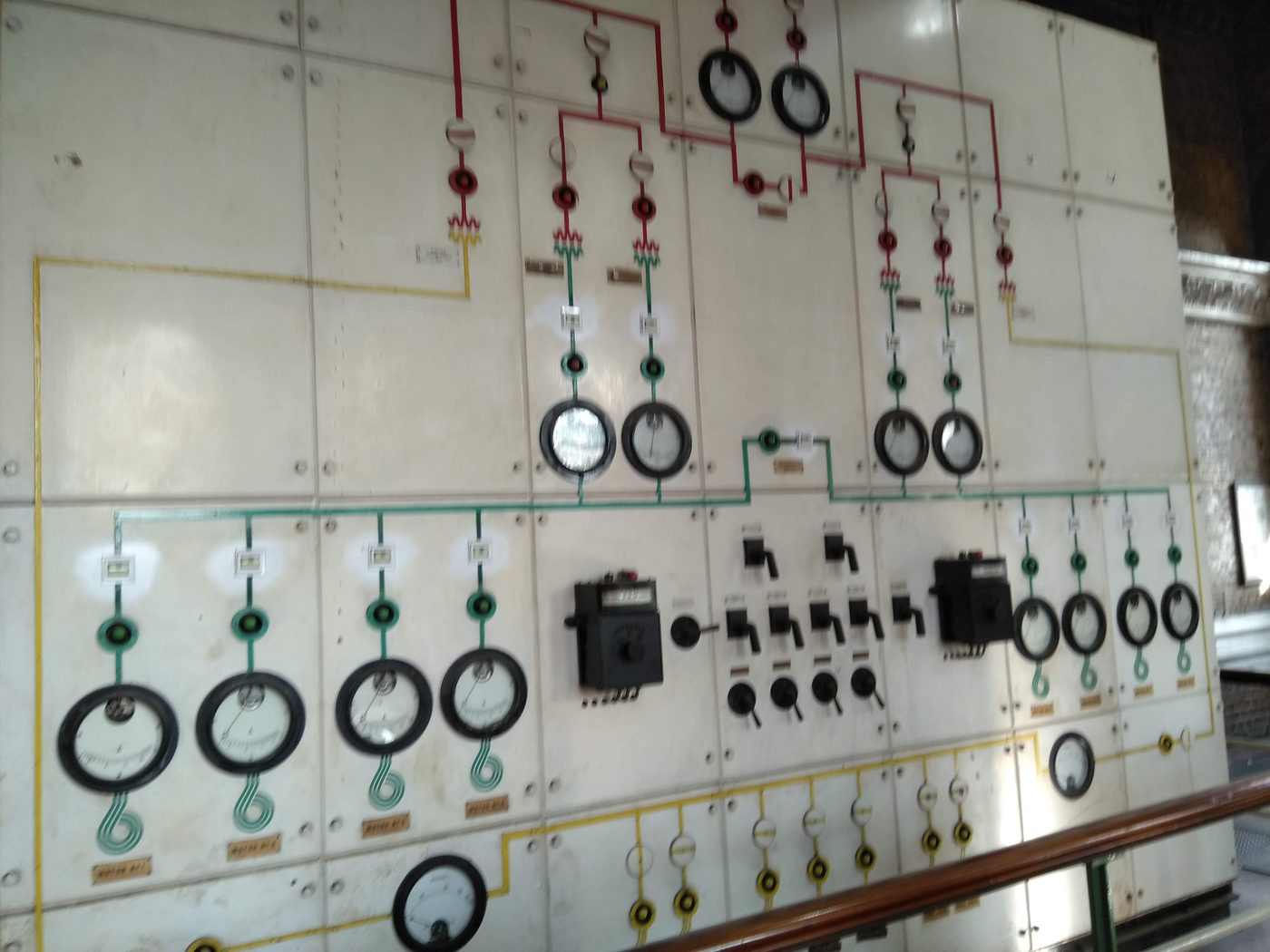
Consider the hydraulic power station at Wapping. It opened in 1890 and was run by the London Hydraulic Power Company, which pushed pressurised water through nearly two hundred miles of cast iron main under the streets to lift theatre safety curtains, work dock cranes and drive the lifts of the West End. It kept doing that until 30 June 1977, by which point it was an anachronism operating in a city that had long since gone electric. A building like that is not decorative. It is evidence of a whole vanished logic of how power moved around London.
The same is true of the pumping stations of the eastern marshes, built into the sewer system that Joseph Bazalgette laid out after the Great Stink of 1858 and which London, with some upgrades, is still using. And of the district energy centres now hidden behind protected historic facades in the City, which heat, cool and power office blocks from plant rooms buried several storeys below the pavement. You can walk past all of this every day for a decade and never register that it exists.
This is the quiet argument Open House makes. A city is not a collection of monuments with people living between them. It is a functioning machine, and most of the machine is deliberately invisible. Nine days a year, some of it is not.
A tower on its way to becoming a hotel
If there is one building where the festival's appeal and its urgency meet, it is the BT Tower. Designed by Eric Bedford and G. R. Yeats and completed in 1964, it rises 177 metres to the roof and 189 with its antenna spire, and for a while it was the tallest thing in Britain. It opened to the public on 19 May 1966, complete with a revolving restaurant on the thirty-fourth floor at around 167 metres, which is exactly the sort of detail that dates a building to its decade more precisely than any facade.
The public part did not last. The tower closed to visitors after a bomb went off in 1971, and the restaurant's lease finally expired in 1980. Since then it has been, for almost everyone, a thing you look at rather than enter.
That is now changing again, and not in a way that guarantees future access. In February 2024, BT Group announced it had sold the tower to MCR Hotels, who intend to keep the structure and turn it into a hotel. Whatever that becomes, it will not be the building that exists now. Anyone who has spent years intending to get up there eventually should treat this year's programme with a certain urgency.
Houses as arguments
The residential listings are where Open House is at its most argumentative, because every house that opens is a proposition about how people ought to live.
Ernő Goldfinger's Glenkerry House in Poplar is a fourteen storey block completed in the 1970s and run, unusually, as a co-operative by the people who live in it. That combination of uncompromising concrete and collective ownership is a specific mid-century answer to the housing question, and it is still being tested by its residents daily. Richard and Su Rogers built a house in Wimbledon for his parents at the end of the 1960s that was meant as a prototype: a dwelling assembled from industrially produced components, light, bright and in principle repeatable. It is a manifesto with a kitchen in it.
The newer entries continue the argument. A House for Artists in Barking combines flats with shared workspace and a public programme, on the theory that affordable housing for artists should come with an obligation to the neighbourhood around it. Six Columns in south London, by 31/44 Architects, won RIBA House of the Year in 2024 and answers a much narrower question, which is what a single well made house can do on a difficult urban site.
Seen in one weekend, these buildings stop being isolated curiosities and become a continuous conversation about London that has been running for sixty years without resolution. Readers who enjoy that kind of argument in built form may also like our piece on Dulwich Picture Gallery, a building that solved a very different problem in 1817.
Rooms where the work happens
A third strand opens the places where cultural work is actually produced, as opposed to consumed. The National Theatre's studio building is one: rehearsal rooms, writers' rooms, a script library and the theatre's archive, which is where productions exist before and after the fortnight they are visible to the public. Recording studios, immersive theatre workshops and prop stores fall into the same category.
The most seductive of these listings tend to be the archives. The Zaha Hadid Foundation holds models, drawings and plans alongside furniture, paintings, interiors, fashion and jewellery design, which together make the case that Hadid's practice was never confined to buildings. An archive is a working space, not an exhibition, and being allowed into one is a different experience from seeing its contents in a vitrine. It is the closest most people get to watching how a body of work was assembled. The same instinct runs through our account of Ben Uri and the émigré roots of modern British art: institutions look very different once you see what they keep in the back rooms.
How to actually use the programme
Open House rewards planning and punishes improvisation, so a few practical points are worth more than another paragraph of enthusiasm.
Some venues are drop-ins and some require a free ticket, and the ticketed ones for the most sought after buildings tend to be claimed within hours of release. The official programme and its interactive map are the only reliable source for what is open, when, and on what terms, and listings continue to be added and amended right up to the festival. Sorting by borough rather than by building is the single most useful trick: three or four listings within walking distance of each other will always beat one heroic cross city dash. Accessibility information, BSL tours and family sessions are listed per venue rather than centrally.
It is also worth remembering that the small entries are frequently the good ones. A working mosque, a livery hall, a Victorian pumping station or somebody's carefully rebuilt terraced house will often tell you more about how London actually works than the tallest thing on the list.
Why the numbers matter
The 2025 festival recorded 370,541 visits, an increase of 35 per cent on the previous year, with 7.7 million views of the festival website and 92 per cent of surveyed visitors reporting improved wellbeing. Those are unusual figures for an architecture programme, and they say something that the sector does not always accept: public interest in how buildings work is not niche. It is simply rarely invited.
Open City, the charity behind the festival, is a registered charity working to make the built environment more open and more legible to the people who live in it. The London festival was the origin of what is now an international network of cities running their own versions. Thirty-five years in, the premise has not changed. For nine days, the doors are unlocked, the plant rooms are lit, and the city consents to explain itself.
Open House Festival 2026 runs 12 to 20 September across all 33 London boroughs. Entry is free. Listings, booking and the interactive map are at programme.openhouse.org.uk. Sources: Open City, Open House Festival 2026 and the Open House Festival 2025 Impact Report.